Ideas & How-Tos
Rhyming Treasure Hunt Clues for Kids: 16 Riddles for Home
Rhyming clues for a treasure hunt can lead a child from one familiar home spot to the next. Choose a few of the sixteen two-line options below, copy only the verse onto each card, and keep the answer and placement instruction for yourself. Read the simpler couplets aloud for ages 4–5 or offer the riddles to ages 6–9.
Quick Answer
- Choose four or five reachable home spots before selecting rhymes.
- Pick the simpler couplets for ages 4–5 and read them aloud.
- Pick the riddles for ages 6–9 if the child wants more to solve.
- Put only the two verse lines on the child-facing card.
- Write each answer and the next card's exact position on your own sheet.
- Place cards from the finish back to the start, then walk the route.
Eight Simple Rhyming Clues for Ages 4–5
These couplets name a visible feature of the destination. Read each verse slowly and point out its useful words if the child pauses. The numbers help you choose cards; they do not prescribe a route. Put each line on its own line when you copy the verse, without the answer below it.
1. Sofa
Where grown-ups sit on the long soft seat,
A card is waiting, flat and neat.
Answer: sofa. Place the following card on a sofa cushion, fully visible.
2. Toy Basket
Where do your resting playthings go?
Find their basket sitting low.
Answer: toy basket. Place the following card across the top of the toys, within reach.
3. Bed
When daylight ends, where do you rest?
Find your blanket like a nest.
Answer: bed. Set the following card on top of the blanket at the foot of the child's bed.
4. Fridge Door
Where milk keeps cold both night and day,
My door holds paper on display.
Answer: fridge door. Fix the following card to the outside with a magnet at child height.
5. Dining Table
Where dinner plates sit in a row,
On that table the next words show.
Answer: dining table. Place the following card on a cleared, reachable edge of the dining table. If there is another table, tell the child the room before play.
6. Shoe Rack
Where shoes rest side by side,
A low rack has a card to hide.
Answer: shoe rack. Place the following card on a low shelf beside a pair of shoes.
7. Laundry Basket
Where dirty clothes go in a heap,
Their basket has a card to keep.
Answer: laundry basket. Lay the following card flat on top of the clothes, without burying it.
8. Coat Hooks
Where jackets hang before you go,
A card waits on a hook down low.
Answer: coat hooks. Hang the following card from a low hook beside the child's jacket.
Eight Rhyming Riddles for Ages 6–9
These lines describe what a spot does or where it belongs. Let the child consider the whole couplet before giving a hint. If your house has two of an object, add a truthful room detail to the version you copy. Keep paper on the outside of appliances and on low, dry surfaces.
9. Bookshelf
Many silent spines stand tight;
On my low shelf, stories wait at night.
Answer: bookshelf. Place the following card beside books on a low shelf, with an edge showing.
10. Front-Door Mat
Wipe your feet when you come in;
I'm the spot where walks begin.
Answer: front-door mat. Use the indoor mat and put the following card partly beneath its near edge, keeping it flat.
11. Kitchen Chair
Beside the kitchen table I stay;
Four legs hold my seat all day.
Answer: kitchen chair. Pull one chair slightly out from the table and lay the following card on its seat.
12. Reading Nook
A quiet corner holds a chair;
You curl up with a story there.
Answer: reading nook. Place the following card on its cushion or low chair seat.
13. Bed Pillow
By night your head can rest on me;
On top of your bed is where I'll be.
Answer: bed pillow. Set the following card on top of the child's bed pillow, within reach.
14. Hallway Table
Near the front hall I stand on four;
My flat top holds keys by the door.
Answer: hallway table. Put the following card on a clear corner of the hallway table.
15. Dry Bathtub
I hold a splash when baths are due;
Today my dry rim holds a clue.
Answer: bathtub. Place the following card on the dry, reachable rim of an empty bathtub.
16. Washing Machine
I wash the clothes that spin around;
On my closed top, a card is found.
Answer: washing machine. Place the following card on its closed top, never inside it. Clear detergent, laundry pods, and other products off the top and out of reach before you place the card. Use this clue only if the top is within easy reach from the floor and the machine is off.
Build a Trail From the Verses
A card's verse points to the place where the following card waits. For example, give the sofa verse first. On the sofa put the bookshelf verse. Beside the books put a verse for a third destination. The final verse points to the finish. Do not put the sofa verse on the sofa, or the child will arrive there with no new direction.
Write the route on a private sheet with the card number, its answer, and the exact place the next card will wait. Five different spots make a manageable first route. If you use a spot twice, keep the later card with you until the child has finished the first visit. Lay out the ending first and work backward. Then walk the route once, reading each card aloud, to catch any rhyme that could point somewhere else in your home.
Put the finish note or gift on a place the child has not visited yet. A cleared dining table can hold a book, a snack, or a note about what happens next. The indoor treasure hunt guide shows how to arrange a room-to-room route. For nonrhyming alternatives, use these household scavenger hunt clues.
Write Your Own Two-Line Rhyme
Pick the answer before finding a rhyme. List two facts: what the spot does and where it is. For the shoe rack, shoes rest on it and it stands near the door. Write a plain first line about the shoes, then try a second line ending with “door.” Read both lines aloud. If the rhyme forces a false detail, change the ending word rather than the fact.
A useful clue has one fair answer in your home. “A soft place to rest” could mean a sofa or bed, so name the living room if you mean the sofa. A rhyme can be slightly uneven; the child still needs to know where to go. You can invite an older child to write the next verse for you, but check the chosen spot and placement before anyone follows it.
Keep the answer sheet separate from the printed cards. Fold or cut the cards so each verse stands alone, then collect them as the child moves along. If a younger sibling joins, read each line aloud and let the children take turns finding the card. The picture clue guide has another format for a younger group.
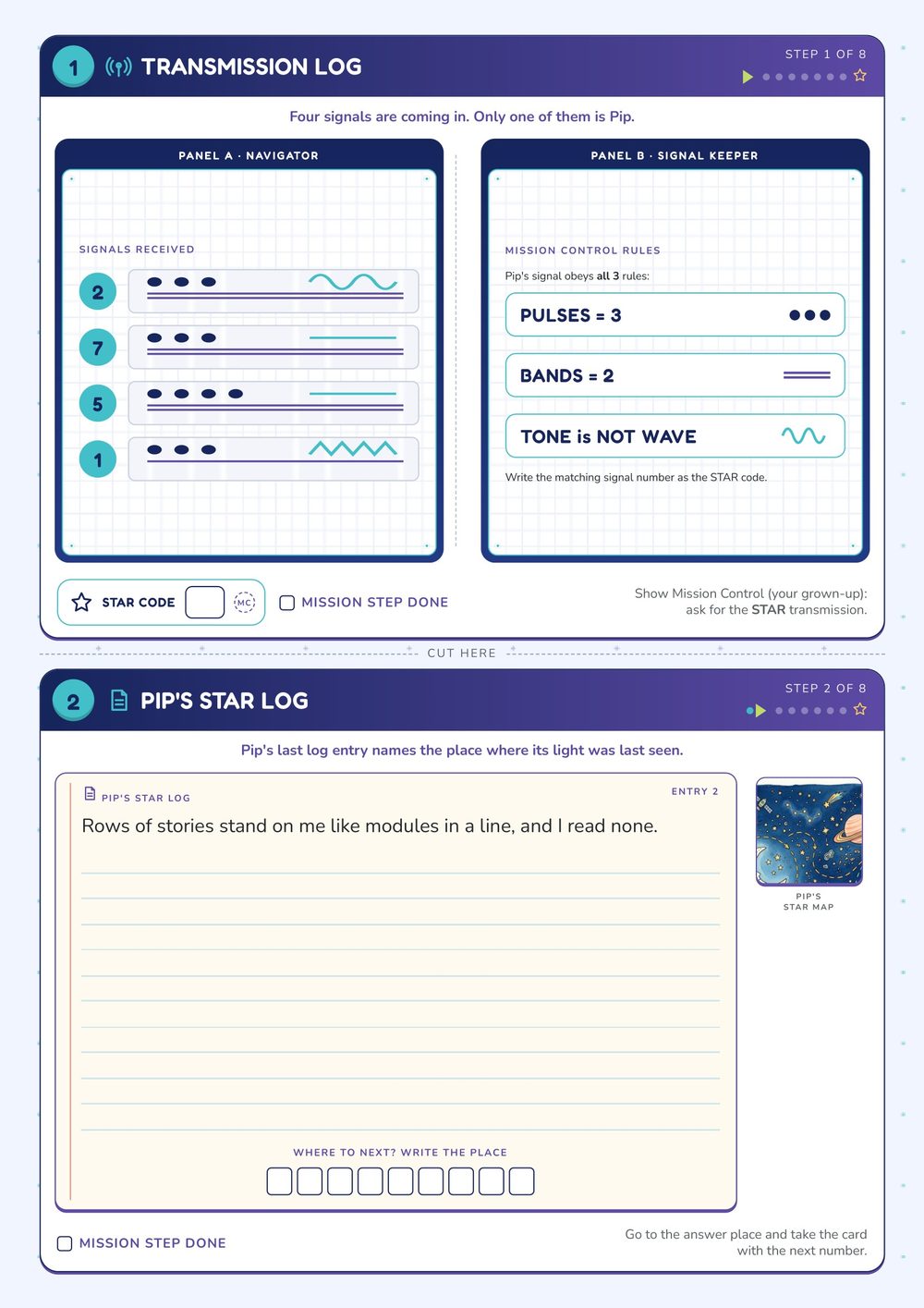
Sample Pages

Questions
Do treasure hunt rhymes have to be perfect?
No. A near rhyme is fine if the child can hear the clue clearly and find one fair answer. Say both lines aloud. If the rhyme makes the location confusing, change the rhyme instead of hiding the answer.
How long should a rhyming clue be?
Two short lines are enough for a home card. Each line can give one useful fact about the destination. Keep the answer and placement note on your own sheet rather than on the card you hand the child.
Can kids write clues for each other?
Yes. Let one child pick a safe, reachable spot and write or dictate two facts about it. Check the answer together before the other child starts, then help place the next card where it can be found.
How do I make a rhyme harder?
Replace a direct name with what the object does, or add a clue about its position in the room. Keep a unique answer. If both the sofa and bed fit the rhyme, name the room to make the puzzle fair.